
Research has been underway to harness the power of bacteria and turn it into electrical power since at least 2006. Originally performed with fuel cells, this technology has evolved to using plants as “carbon donors” which put sugars into the soil, which are then turned into electrical potential by bacteria.
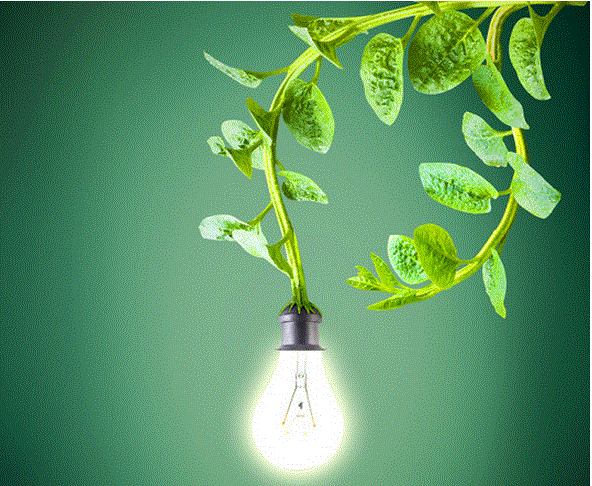
This is a pretty picture, but really the bacteria in the soil generate the electricity (not the plant)
The effort is currently being pioneered by Plant-E‘s founders Marjolein Helder and David Strik, who published a study in 2013 detailing their advances in developing the plant microbial fuel cell. As the clock ticks on, they appear to getting closer to emerging with a fully functional and commercially viable system. They recently used it to power streetlights as a proof-of-concept in the Netherlands. This invention is actually one of astounding importance.
Most of our “renewable” energy generation techniques require large and costly industrial infrastructure: solar cells require factories, lots of water, quite a bit of electricity, and often rare earth minerals, in their production. The same is true for building most generators, including wind, and of course nuclear (which requires a lot of logistics and constant surveillance). No other available type of power generation offers actual carbon and environmental neutrality.
This truism about power generation does NOT hold true with plant microbial fuel cells: you only need the plants, the soil, and a battery to connect it to. Luckily, we already have an environmentally friend, quinine based organic battery that was developed a little more than a year ago at Harvard University. Theoretically, we could now generate and store electricity with minimal or no ecological damage resulting from it. This is literally thousands of times better than current methods, especially if we compare it to coal (which puts heavy metals, in addition to carbon, into our atmosphere and streams).
As the extinction rate continues to increase, and the number of surviving species continues to decrease, we should really considering investing heavily in both the research and application of this and similar projects. After all, our survival on this planet depends on keeping it habitable, both for us and the other creatures living alongside us.