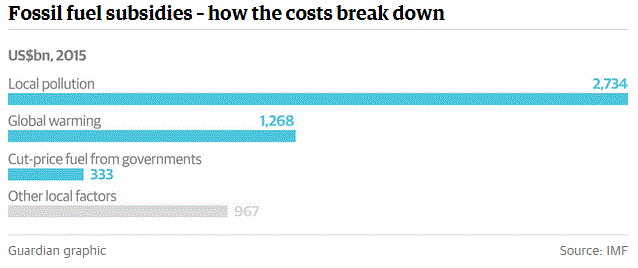
On the heels of a U.N. report which exposed almost no global industry as being profitable when environmental costs are recognized comes a newer report for the IMF, which focuses on fossil fuels. The report calculated that fossil fuel industries (coal, gas, and oil) are being subsidized by approximately $5,300,000,000,000 ($5.3 trillion) globally.
An article in the Guardian cites climate economist (of the London School of Economics) Nicholas Stern as saying the figure actually underestimates the cost by focusing only on the more immediate impacts.
Before dismissing Stern’s claim that $100,000,000 a minute is too small, consider that Costanza et al’s 2014 analysis calculated global ecological losses as costing between $4-20 trillion per year. When put into the context of the recent report for the U.N, we realize that fossil fuels are likely causing at least $5.3 trillion in environmental and human externalities per year, and represent only one of many sectors driving global diversity loss (52% of over 10,000 populations of wild animals died off in the last 40 years).
The primary driver of these costs is not global warming, but habitat loss, increased environmental stress through contaminants, and over-exploitation. Companies are routinely conditioned to continue unethical environmental practices, because the fines are almost always lower than the profits they made.
Keep in mind that within this analysis, pollution played a much bigger role than global warmning, which was actually the main point Stern appears to be critiquing.