
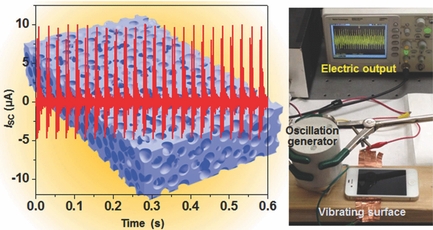
A collaboration between Sun Yat-sen University in China, and the University of Minnesota Duluth, have developed a mesoporous piezoelectric nanogenerator which transforms mechanical force into electric energy. This removes the need for any form of charging cord, and can allow electronics to charge themselves.
Using polyvinylidene fluoride (or PVDF) (a common polymer with piezoelectric properties, meaning it can generate electricity from mechanical force) the scientists were able to use the phone’s weight to help enhance its displacement and amplify its electrical output.
This could mean the eventual end of “charging” your phone or other portable electronics. By carrying it with you, placing it on top of your washing machine, or shaking it, you are actually able to take your body’s mechanical energy and turn it into energy. This technology could be used in transportation to reduce energy use during operation.
This spongy nanomaterial has wide-ranging applications beyond charging mobile phones, and may even see use in homes, vehicles, and of course a wide range of mobile electronics. Along with sugar based and chinone based batteries , it is beginning to look more likely that we will be able to sustainably generate and store energy in the future, provided we maintain biosphere integrity up until that point.