
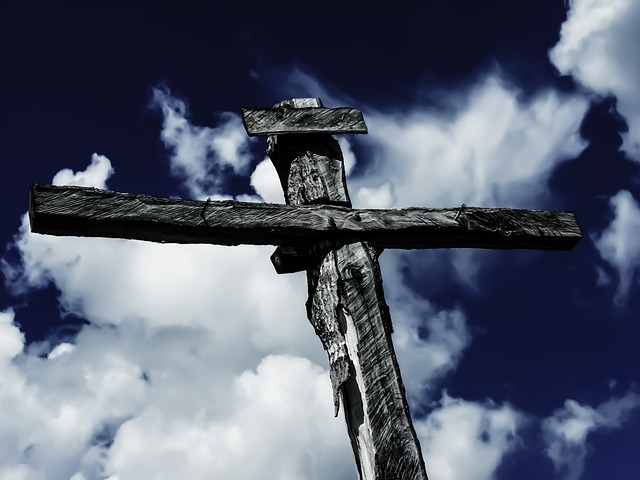
For Saudi Arabia, sometimes it’s not enough to simply behead a person who has run afoul of the government: On some occasions, there’s nothing like the crucifixion of an activist to how your dedication to human rights:
A group of U.N. experts has joined rights groups in calling on Saudi Arabia to halt the execution of a Shiite man convicted of crimes reportedly committed as a teenager during protests inspired by the Arab Spring.
Ali al-Nimr, the nephew of firebrand Shiite cleric Sheikh Nimr al-Nimr, faces execution by beheading and an additional rare punishment of “crucifixion.”
Saudi Arabia is, in case you missed the message, one of the world’s worst offenders in terms of human rights. For an analysis of Saudi Arabia’s terrible human-rights record, please see Amnesty International’s latest report. I would have instead directed you to Human Rights Watch’s report, except that Human Rights Watch has a history of—believe it or not—fundraising in Saudi Arabia. It should not, of course, fundraise in any non-democratic, primary-target country, particularly one in which giving to a human-rights group could land the donor in terrible trouble.
Saudi Arabia sits on the UN Human Rights Council and is even part of the committee that helps choose the council’s human-rights experts. The recent appointment of Saudi Arabia to a leadership role in this group is an affront to morality and good sense.
A recent interview with Deputy Spokesperson Marc Toner revealed that the United States government “welcomes” Saudi Arabia into a Human Rights Council leadership position. Of course, Saudi Arabia is one of the United States’ closest allies in the Middle East and purchases billions in arms from the United States and other NATO allies each year, which apparently means that they are beyond criticism on an official level. In case this seems far-fetched, here is a partial transcript of the interview:
QUESTION: Yesterday, Saudi Arabia was named to head the Human Rights Council, and today I think they announced they are about to behead a 21-year-old Shia activist named Muhammed al-Nimr. Are you aware of that?
MR. TONER: I’m not aware of the trial that you—or the verdict—death sentence.
QUESTION: Well, apparently, he was arrested when [he] was 17 years old and kept in juvenile detention, then moved on. And now, he’s been scheduled to be executed.
MR. TONER: Right. I mean, we’ve talked about our concerns about some of the capital punishment cases in Saudi Arabia in our Human Rights Report, but I don’t have any more to add to it.
QUESTION: So you—
QUESTION: Well, how about a reaction to them heading the council?
MR. TONER: Again, I don’t have any comment, don’t have any reaction to it. I mean, frankly, it’s—we would welcome it. We’re close allies. If we—
QUESTION: Do you think that they’re an appropriate choice given—I mean, how many pages is—does Saudi Arabia get in the Human Rights Report annually?
MR. TONER: I can’t give that off the top of my head, Matt.
QUESTION: I can’t either, but let’s just say that there’s a lot to write about Saudi Arabia and human rights in that report. I’m just wondering if you [think] that it’s appropriate for them to have a leadership position.
MR. TONER: We have a strong dialogue, obviously a partnership with Saudi Arabia that spans, obviously, many issues. We talk about human-rights concerns with them. As to this leadership role, we hope that it’s an occasion for them to look at human rights around the world but also within their own borders.
So, the United State welcomes the leadership of Saudi Arabia on a council meant to expose the human-rights violations of countries like Saudi Arabia. To describe the situation as bizarre or obtuse wouldn’t even begin to cover it. There are reasons we are allies with Saudi Arabia, of course, but even Barack Obama has made it clear—even before he was president—that these reasons should to be scrutinized.
Certainly, this offers Saudi Arabia to “repent” for its present injustice and hold itself to a higher standard. Unfortunately, it seems unlikely that Saudi Arabia will do anything other than influence decisions and international politics in its favor, and it lays on people like us to point out and draw attention to their wanton human rights abuses.